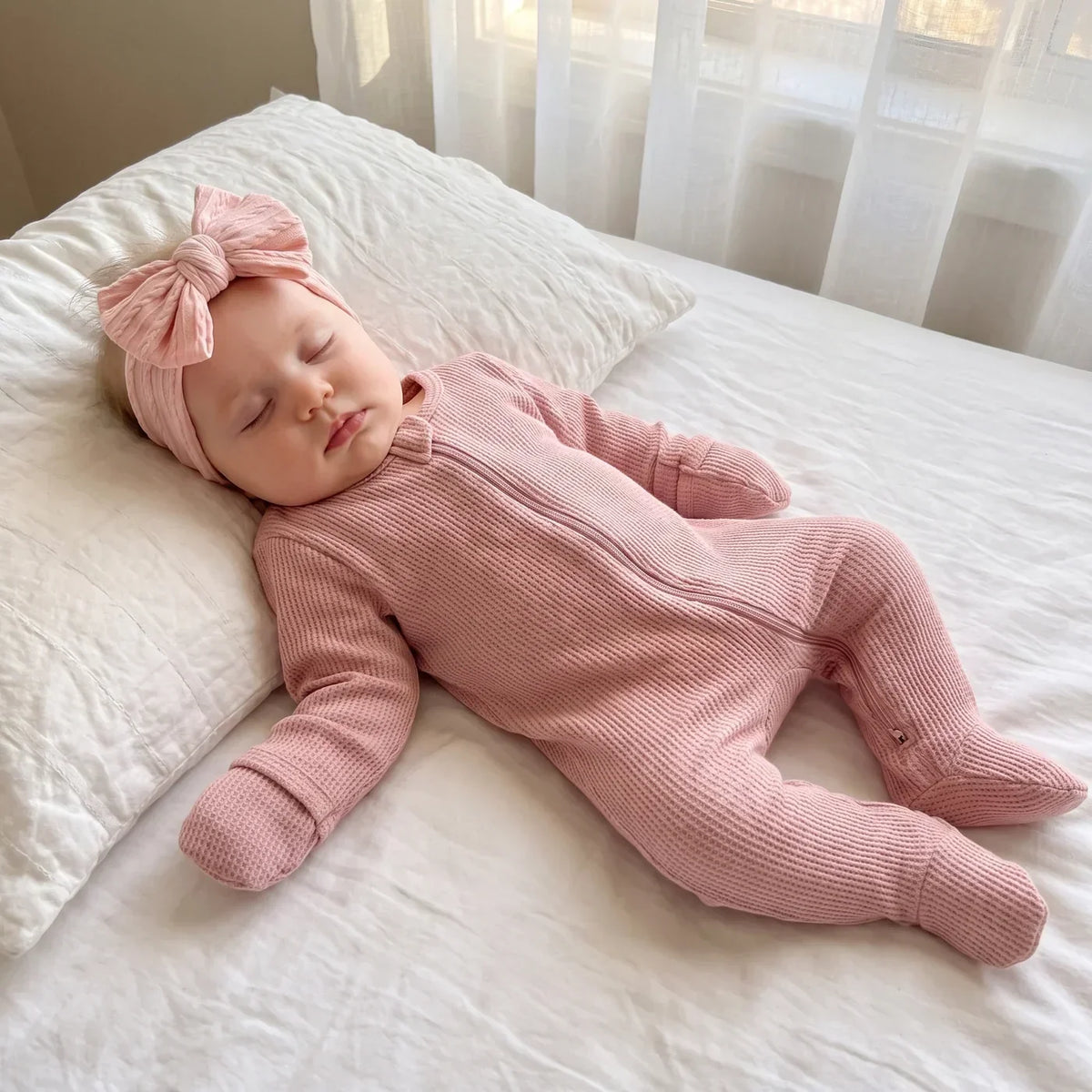


TOG for Fall: Choosing the Right Baby Sleep Sack for Cooler Nights
As the seasons change and cooler fall nights arrive, many parents start asking the same question:
What’s in this guide
- What Does TOG Mean for Baby Sleep Sacks?
- What TOG Sleep Sack Is Best for Fall?
- Why Choose a 1.0 TOG Sleep Sack for Fall?
- What Should Baby Wear Under a 1.0 TOG Sleep Sack?
- Baby Sleep Sack TOG Guide for Fall
- TOG for Fall by Room Temperature: A Quick Chart
- 0.5 vs 1.0 vs 1.5 TOG: When to Use Each
- How to Choose the Best Fall Sleep Sack for Your Baby
- Fall Baby Sleep Essentials: Preparing for Cooler Nights
- Questions Parents Ask About TOG and Sleep Sacks
- Keep Your Baby Cozy This Fall with PrettyBirds Baby
What TOG sleep sack is best for fall?

Unlike summer or winter, fall weather can be unpredictable. One night may feel warm, while the next can bring cooler temperatures. Finding the right sleepwear balance can feel challenging — especially when you want your baby to stay comfortable throughout the night without overheating. Getting the TOG for fall right comes down to your baby's room more than the calendar.
Understanding TOG ratings can make choosing the right baby sleep sack much easier. For many families, a 1.0 TOG sleep sack is an ideal choice for fall because it provides lightweight warmth while keeping your little one cozy and comfortable during changing temperatures.
What Does TOG Mean for Baby Sleep Sacks?
TOG stands for Thermal Overall Grade, a rating system used to measure how warm a sleep sack or wearable blanket is.
The higher the TOG rating, the more insulation the product provides.
A simple guide:
| TOG Rating | Best For |
|---|---|
| 0.5 TOG | Warm weather and summer nights |
| 1.0 TOG | Mild temperatures and transitional seasons like fall |
| 2.5 TOG | Colder winter nights |
When choosing a baby sleep sack, it is important to consider your baby's room temperature, not just the season. The temperature of the room is the number worth checking first — the season only tells you roughly where to start.
What TOG Sleep Sack Is Best for Fall?
A 1.0 TOG Sleep Sack Is Perfect for Fall Weather

Fall is a season of transition. Temperatures begin to drop, but the weather is usually not cold enough for heavy winter sleepwear.
This is why many parents choose a 1.0 TOG sleep sack for fall.
A 1.0 TOG sleep sack provides:
- Lightweight warmth for cooler nights
- Comfortable coverage without feeling too heavy
- Breathability for changing temperatures
- A cozy sleep environment during the transition from summer to winter
For many babies, a 1.0 TOG baby sleep sack works well in rooms around 68–75°F (20–24°C), making it a versatile choice for fall nights.
Why Choose a 1.0 TOG Sleep Sack for Fall?
1. Helps Keep Baby Comfortable During Temperature Changes
Fall temperatures can change quickly. A room that feels warm in the evening may become cooler overnight.
A 1.0 TOG sleep sack helps provide consistent comfort by adding a gentle layer of warmth while allowing your baby to move naturally. Instead of adding too many layers, a properly fitted sleep sack gives your baby one even, cozy layer of warmth.
2. Provides Warmth Without Overheating
Babies are more sensitive to temperature changes compared to adults. Choosing the right sleepwear layer is important for keeping them comfortable.
A lightweight fall baby sleep sack with a 1.0 TOG rating provides enough warmth for cooler nights while remaining breathable.
A helpful way to check your baby's comfort:
- Feel their chest or the back of their neck — not their hands or feet, which run cooler.
- They should feel warm, but not sweaty or damp.
3. Becomes Part of a Calm Evening Wind-Down
Babies thrive on familiar routines. As seasons change, adjusting sleepwear can help keep evenings comfortable and familiar, and using a consistent baby sleep sack for fall can become part of your baby's evening wind-down — a gentle cue that it is time to relax and settle down.
What Should Baby Wear Under a 1.0 TOG Sleep Sack?

The best layers under a sleep sack depend on your baby's room temperature and individual comfort. Here is a simple fall guide:
| Room Temperature | What Baby Can Wear Under a 1.0 TOG Sleep Sack |
|---|---|
| 72–75°F (22–24°C) | Short sleeve bodysuit or lightweight pajamas |
| 68–72°F (20–22°C) | Long sleeve pajamas or a cotton bodysuit |
| Below 68°F (20°C) | Consider warmer pajamas or additional layers |
Every baby is different, so always check your baby's comfort and adjust layers when needed.
Baby Sleep Sack TOG Guide for Fall
Choosing the right TOG rating does not have to be complicated.
Use this simple guide:
| Season | Room Temperature | Recommended TOG |
|---|---|---|
| Summer | 75°F+ | 0.5 TOG |
| Fall | 68–75°F | 1.0 TOG |
| Winter | Below 68°F | 2.5 TOG |
A 1.0 TOG sleep sack is often the perfect middle option for fall because it provides comfort during those months when temperatures are cooler but not yet freezing.
TOG for Fall by Room Temperature: A Quick Chart
The guide above works by season. This chart works by the number on a room thermometer, which is the more reliable way to pick the right TOG for fall on any given evening.
| Room Temperature | TOG to Reach For | What to Wear Underneath |
|---|---|---|
| 75°F+ (24°C+) | 0.5 TOG | Short-sleeve bodysuit |
| 72–75°F (22–24°C) | 1.0 TOG, or 0.5 TOG if the room feels stuffy | Short-sleeve bodysuit or lightweight pajamas |
| 68–72°F (20–22°C) | 1.0 TOG | Long-sleeve pajamas or a cotton bodysuit |
| 64–68°F (18–20°C) | 1.5 TOG, or 2.5 TOG at the cooler end | Long-sleeve pajamas |
| Below 64°F (18°C) | 2.5 TOG | Long-sleeve footed pajamas |
Three ways to read any TOG sleep sack chart well:
- Measure the right room. Check the room your baby is actually in for the evening, not the hallway thermostat.
- Between two rows, go lighter. Choose the lower TOG rating and adjust the layer underneath — adding a layer is easier than spotting one too many.
- Trust the neck, not the hands. Warm and dry at the back of the neck is right; sweaty or damp means a layer comes off.
This is general guidance, not medical advice. For the wider picture, the NICHD keeps a plain-language list of ways to reduce baby's risk, and the AAP has a checklist for setting up baby's room. If your baby was born early, tends to run warm, or has a health condition, ask your pediatrician what's right for them.
0.5 vs 1.0 vs 1.5 TOG: When to Use Each
These three numbers get compared most often, and the gap between them is smaller than it sounds.
- 0.5 TOG is a light layer, closer to a cotton sheet than a blanket. It suits warm rooms, early fall weeks that haven't cooled down yet, and homes where the heating runs high once the season turns — a heated house in November can feel like summer indoors.
- 1.0 TOG is the everyday TOG for fall in most homes. It covers roughly 68–75°F with a change of layer underneath rather than a change of sack.
- 1.5 TOG is a step warmer, for rooms that settle in the mid-60s. It's widely available and makes a reasonable bridge to a 2.5 TOG in winter.
1 TOG vs 1.5 TOG: if the room rarely drops below 68°F, a 1.0 with long sleeves underneath usually covers it. If it regularly dips lower, a 1.5 is simpler than stacking layers.
For transparency, we make sleep bags in 0.5 and 1.0 TOG only — not 1.5:
- 0.5 TOG embroidered sleep bags: Pink, White and Light Green.
- 1.0 TOG embroidered sleep bags: Pink, Golden Beige and Orange. The full range is in our embroidered sleep bag collection.
- Printed personalized sleep bags, with the baby's name set into the design. We don't publish a TOG figure for these — they're made for spring and autumn, and we'd rather say so plainly than guess a number.
How to Choose the Best Fall Sleep Sack for Your Baby
When selecting a baby sleep sack for fall, consider these important features:
Breathable and Comfortable Fabric
Soft, breathable materials help prevent your baby from feeling too warm while providing gentle comfort.
The Right Fit
A sleep sack should allow your baby to move their legs freely while fitting comfortably around the shoulders.
Easy Nighttime Changes
Features like convenient zippers and easy-access designs make diaper changes simpler during nighttime.
Seasonal Versatility
A 1.0 TOG sleep sack is a practical choice because it works well during fall and other mild-weather months.
Sleeves or Sleeveless?
- A sleep sack with sleeves adds warmth at the arms. It can help in a cool room, or for a baby whose arms always seem to end up outside every layer.
- Sleeveless is the more flexible fall choice. The arms stay free, and you change the warmth by changing what's underneath — short sleeves on a mild evening, long sleeves on a cooler one.
Our printed sleep bags are sleeveless and made to go over a long-sleeved layer as the weather cools.
Fabric: Cotton, Bamboo, and What TOG Actually Measures
Interest in the bamboo sleep sack has grown fast this year, and it's easy to see why: bamboo-based fabric feels smooth and soft, with a gentle stretch and a cool touch. Most of it is a viscose or rayon made from bamboo, so read the label for the full fiber content. Cotton is the familiar alternative, easy to wash and easy to find.
For warmth, though, the TOG rating matters more than the fiber. Two 1.0 TOG sacks are rated for the same warmth whatever they're made of — the fabric changes how it feels, the number tells you how warm it is. For our own pieces, check each product page and our fabric & care guide before you choose.
Fall Baby Sleep Essentials: Preparing for Cooler Nights
As temperatures begin to change, updating your baby's sleep essentials can help make cooler evenings more comfortable.
A fall baby sleep checklist may include:
- A breathable 1.0 TOG sleep sack
- Comfortable pajamas or bodysuits
- A suitable room temperature
- Soft, breathable baby sleepwear
- A calm evening wind-down
Small changes can make a big difference in helping your baby stay comfortable as temperatures drop.
Questions Parents Ask About TOG and Sleep Sacks
What does TOG mean on a baby sleep sack?
It's a measure of how much warmth the fabric holds in. The higher the number, the warmer the sack: 0.5 is light, 1.0 is the fall middle ground, and 2.5 is made for cold rooms.
Is a 0.5 TOG sleep sack too light for fall?
Not always. In a home where the heating runs warm, or early in the season when rooms still sit above 72°F, a 0.5 TOG is often the better match. Check the room, not the month.
What goes under a sleep sack as it gets colder?
Let the room decide:
- Mild room: a short-sleeve bodysuit
- Cooler room: long-sleeve pajamas
- Cold room: a warmer TOG, rather than a pile of extra layers
Can you use a 1.0 TOG sleep sack in winter?
In a heated home that stays around 68–72°F, often yes, with long-sleeve pajamas underneath. Once the room regularly sits below about 64°F (18°C), a 2.5 TOG is the simpler answer than adding layer after layer.
What size sleep sack should I buy?
Go by the size chart on the product page. A good fit is comfortable around the shoulders with room for the legs to move freely. Ours run 0–6M, 6–12M, 12–18M and 18–24M; if you're buying before the baby arrives, the smallest size is the usual start.
Is a sleep sack a good baby shower gift?
It's one of the more practical ones — a piece used every evening for months rather than once. If you'd like it to feel personal, our printed sleep bags carry the baby's name in the design and are made to order, one baby only, so order 2–3 weeks before your due date.
Keep Your Baby Cozy This Fall with PrettyBirds Baby
Choosing the right TOG for fall does not have to be complicated.
For many families, a 1.0 TOG sleep sack offers the perfect balance of warmth, comfort, and breathability during cooler nights and changing seasonal temperatures.
At PrettyBirds Baby, our sleeping bags are thoughtfully designed to help little ones stay cozy and comfortable through every season. Explore our collection of soft baby sleep sacks, or browse everything in our fall sleepwear collection.
Explore PrettyBirds Baby Sleeping Bags →
Written by Emma Grace