How to Swaddle a Newborn Safely – Step-by-Step Guide
How to Swaddle a Newborn Safely: Step-by-Step Guide to Better Sleep and Calmer Nights
Swaddling can soothe newborns and reduce the startle reflex when done safely. Always put a swaddled baby on the back to sleep, keep the blanket snug at the chest and loose at the hips, and stop swaddling as soon as your baby shows signs of rolling. Avoid weighted swaddles or weighted sleep products. Keep the sleep space clear of loose items and watch for signs of overheating.
What Is Swaddling and Why It Helps
Swaddling is the practice of wrapping your baby’s torso and arms in a thin blanket to provide a snug, womb-like feel. For many newborns, it can reduce fussiness, calm the Moro (startle) reflex, and help them settle for sleep. The key is learning to wrap securely but not tightly and following safe-sleep rules every time.
Safety Rules You Must Follow
-
Back to sleep only and in a separate, flat, firm sleep space with a fitted sheet. No pillows, loose blankets, stuffed toys, bumpers, wedges, or positioners.
-
Stop swaddling at the first signs of rolling. This can happen earlier than you expect; many babies attempt to roll around three to four months, sometimes sooner.
-
Never use weighted swaddles, weighted sleep sacks, or add weight to a swaddle. These products are not recommended by the AAP.
-
Keep hips loose and legs able to bend and spread. Tight, straight-leg swaddling increases the risk of hip dysplasia.
-
Avoid overheating. Dress lightly, check baby’s chest for sweat, and aim for a comfortable room temperature. UK safe-sleep groups recommend about 16–20°C as a guide; adjust layers to climate and season.
Medical note: If your baby is premature, has respiratory issues, hip concerns, fever, or special health needs, ask your pediatrician before swaddling.
Swaddle Checklist
-
Thin, breathable muslin or cotton swaddle blanket
-
Safe sleep space: crib, bassinet, or play yard with a firm, flat mattress
-
Appropriate layers under the swaddle based on room temperature
-
Optional: non-weighted, adjustable swaddle wrap with hook-and-loop or zipper designed for newborns

How to Swaddle: The Hip-Healthy, Classic “Diamond Fold”
Before you begin: Lay a thin blanket on a safe, flat surface in a diamond shape. Fold the top corner down to form a straight edge.
-
Set baby down with shoulders just below the fold so fabric stays well below the chin and nose.
-
Left side across the chest. Hold baby’s left arm gently at the side. Bring the left corner across the torso and tuck it firmly under the back. The chest should feel snug, not tight.
-
Bottom up and loose. Bring the bottom corner up over the feet, leaving room for the hips and knees to bend and move. Do not press the legs straight.
-
Right side across. Hold the right arm at the side, bring the remaining corner across the chest, and tuck it behind the back to secure.
-
Safety check. Ensure you can slide two or three fingers between the swaddle and baby’s chest. Hips and knees should move freely into a natural “froggy” position. Place baby on the back in the crib.
Variations and When to Use Them
-
Arms-in (both arms down)
Best for newborns with a strong startle reflex who are not showing any signs of rolling. Keep the wrap secure at the chest and loose at the hips. -
One-arm-out
Ideal when your baby begins to fight the swaddle or is gradually approaching rolling. Freeing one arm helps with self-soothing while keeping some swaddle comfort. -
Both-arms-out / Transition to sleep sack
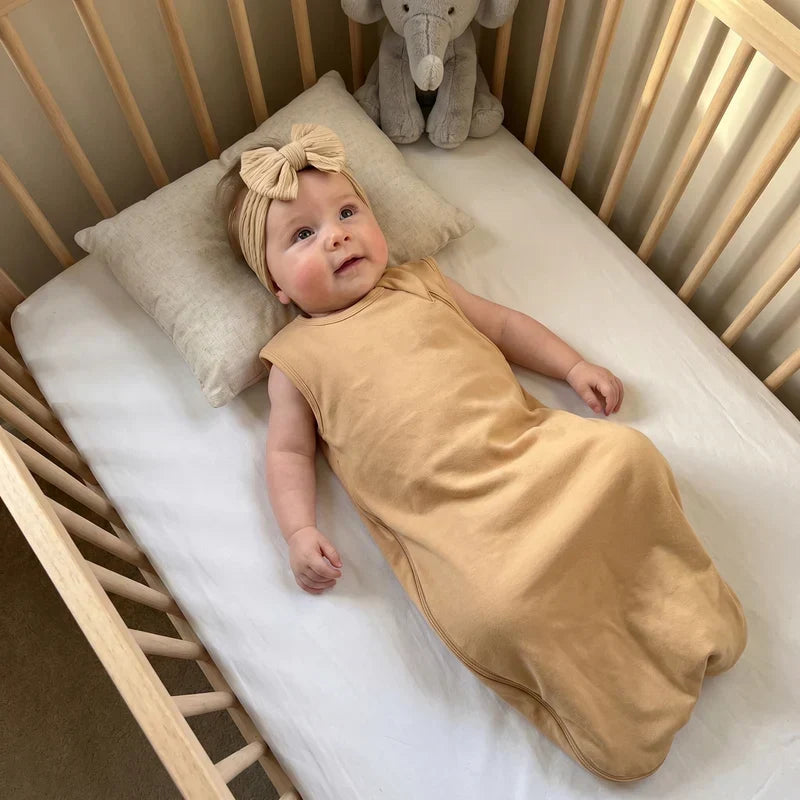
As soon as you see signs of rolling, switch to a non-weighted sleep sack. This maintains warmth without restricting the arms. -
Adjustable swaddle wraps (hook-and-loop or zipper)
Convenient and consistent, but still follow the same rules: snug at the chest, no weight added, and hips free.
How Tight Is “Snug”?
Your baby’s chest should rise and fall easily. As a rule of thumb, you should be able to fit two to three fingers between the swaddle and the chest. If your fingers don’t fit, it’s too tight; if the wrap rides up toward the face or comes loose, it’s too loose.
Room Temperature, Layers, and TOG
Overheating increases risk in infant sleep. Dress your baby in light layers under the swaddle and adjust to the room temperature. As a general UK guideline for sleep bags: 2.5 TOG suits roughly 16–20°C, 1.0 TOG for 20–24°C, and 0.5 TOG for warmer rooms. These are guides—always monitor your baby for sweating or flushed skin.
When to Stop Swaddling
Stop swaddling as soon as your baby shows signs of trying to roll. Rolling can happen earlier than three months. A swaddled roller is at higher risk if they roll to the tummy while arms are restricted. Transition to a non-weighted sleep sack with arms free.
Troubleshooting
-
Baby breaks out constantly
Recheck your fold and chest snugness. Consider a breathable, adjustable wrap for consistency. If breakout continues, try one-arm-out and plan for transition. -
Baby seems hot or sweaty
Remove a layer, choose a lighter blanket, and ensure room is comfortably cool. Watch for damp hair, flushed skin, or fast breathing—signs of overheating. -
Hips look constrained
Redo the bottom fold to allow knees to bend and legs to splay outward naturally. Hip-healthy swaddling keeps legs not straight and together. -
Spits up or needs a feed
Unwrap before feeding and re-swaddle afterward so the fabric doesn’t slip toward the face.
What Not to Do
-
Do not put a swaddled baby to sleep on the side or tummy. Back only.
-
Do not use weighted swaddles, sleep sacks, or add bags of rice/beans.
-
Do not swaddle with straight legs or tight hips.
-
Do not add loose blankets or soft objects to the sleep space.
-
Do not continue swaddling once rolling signs appear—transition immediately.

Frequently Asked Questions
Is swaddling safe?
Yes—when combined with safe-sleep practices: back to sleep, firm flat surface, no loose items, no overheating, and hips kept loose.
What if my baby hates swaddling?
Try one-arm-out, use a different breathable fabric, or move to a non-weighted sleep sack. Some babies prefer hands near the face for self-soothing.
Can I swaddle for naps and nights?
Yes, as long as your baby is not showing rolling signs and all safe-sleep rules are followed consistently.
How many hours per day is swaddling okay?
Swaddling is for sleep and calming, not for all-day wear. Give your baby plenty of unswaddled time when awake for stretching and hip movement.
What blanket is best?
A thin, breathable muslin or cotton swaddle. Avoid heavy fabrics and never use weighted products.
Check our swaddle blanket collection at PrettyBirds

Written by Thao Mozigo