

When Should You Stop Swaddling Your Baby?
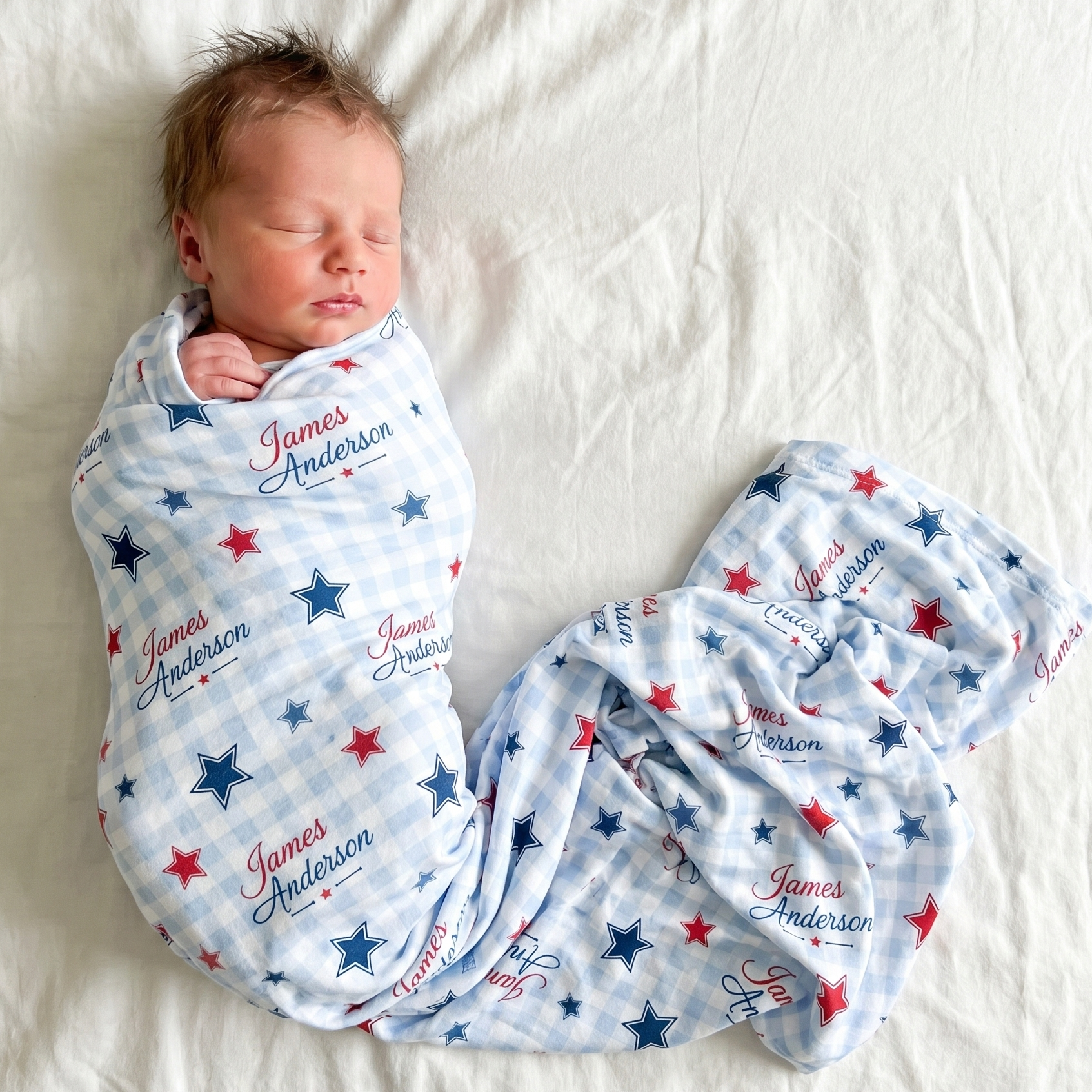
The first time you wrapped your newborn up snug and watched their eyes finally flutter shut, you felt it. That’s the thing that works.
Swaddling is one of the first parenting tricks that actually delivers. It mimics the snugness of the womb, calms the Moro (startle) reflex, and gives exhausted parents some of their most precious early-weeks sleep. No wonder it becomes a non-negotiable part of the bedtime routine. (If you're still perfecting your technique, our How to Swaddle a Newborn Safely – Step-by-Step Guide has you covered.)
But like every beautiful chapter of those early months, swaddling has an end. And knowing when to close that chapter isn’t just about following a schedule — it’s about watching your baby and responding to what they’re telling you.
Here’s everything you need to know about when to stop swaddling, what signs to look for, and how to make the transition as smooth as possible.
When Should You Stop Swaddling? Watch for These 6 Signs
There’s no universal age stamped on swaddling, but there is a universal rule: stop as soon as your baby begins showing signs of rolling over. This typically happens between 2 and 6 months, though some babies show early signs as young as 8 weeks.
The reason is safety. A swaddled baby who rolls onto their tummy can’t use their arms to push back up or turn their head, which poses a real breathing risk. You don’t need to wait for a full roll to act, these early cues are your signal to begin the transition:
1. They’re starting to roll during tummy time or playtime
Any intentional side-to-side movement counts. Directional rocking means the motor pattern is already developing.
2. They’re pushing up on their hands during tummy time
That upper body strength is the direct precursor to rolling.
3. Their startle reflex has calmed significantly
The Moro reflex fades around 3–4 months, and with it, the biological need for swaddling naturally decreases.
4. They’re lifting their legs and flopping them to the side
That hip-swinging movement signals their body is gearing up for rolling.
5. They keep escaping the swaddle
If your little Houdini is freeing their arms every night, their body is literally asking for more room.
6. They’re actively resisting being wrapped
Arching and fussing at wrap time often means they’ve outgrown what the swaddle used to give them.

If you're seeing any of these signs, it's time — regardless of the date on the calendar. When in doubt, check with your pediatrician about your baby's individual development.
Why It Matters: The Safety Reason Behind the Transition
The number one reason to stop swaddling is safe sleep.
A baby who rolls onto their tummy while still swaddled faces several risks: difficulty breathing due to restricted positioning, inability to push back up without free arms, and the potential for a loose blanket swaddle to come undone near their face.
The American Academy of Pediatrics (AAP) recommends always placing babies on their backs to sleep, and once rolling begins, maintaining that position requires their arms to be free.
The good news: transitioning away from the swaddle doesn't have to mean losing sleep. It just means transitioning into something new.
How to Stop Swaddling: A Gentle Step-by-Step Approach
Cold turkey works for some babies. For many others, a gradual transition is gentler and more successful. Here's a simple method:
Step 1 — One arm out. Start by leaving one arm free while keeping the other wrapped. This gives your baby partial freedom while maintaining some of the familiar snugness. Try this for 2–3 nights.
Step 2 — Both arms out. Once your baby settles into the one-arm rhythm, free the second arm. Expect a night or two of adjustment; that's completely normal.
Step 3 — Full arms-free sleep. This is the goal. When both arms are out, and your baby is sleeping comfortably, you've successfully made the transition.
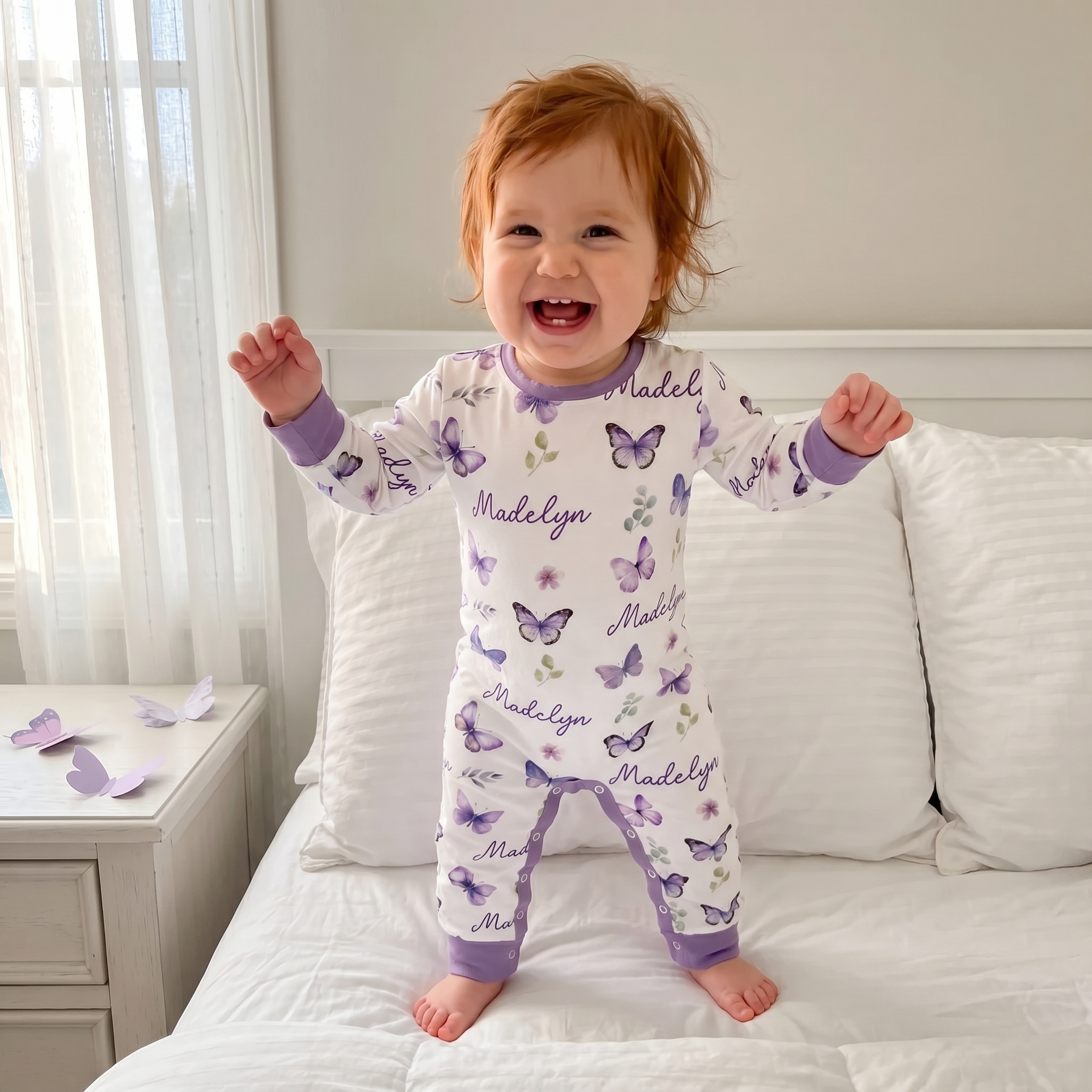
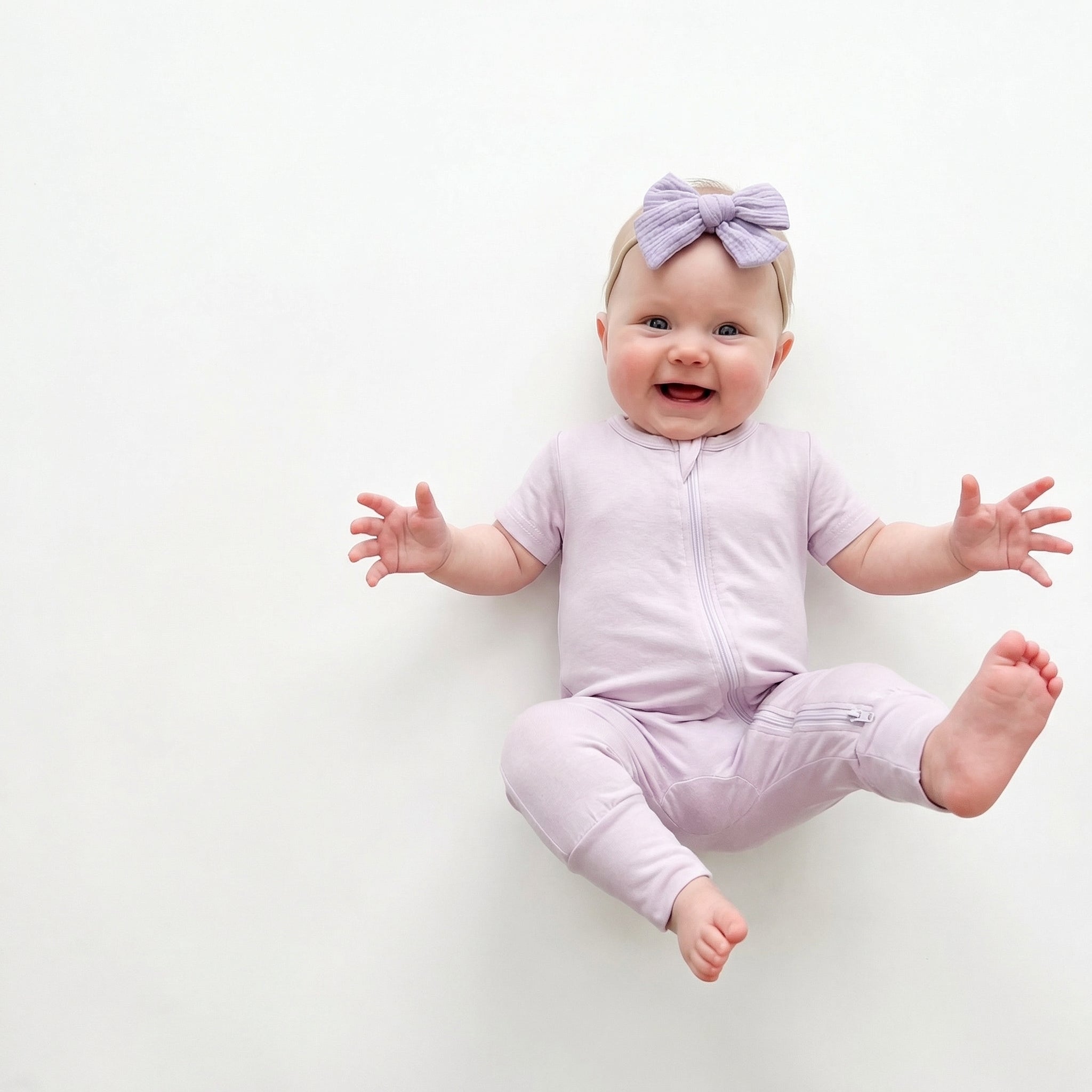
Step 4 — Choose the right sleepwear for the next stage. This is the moment to swap the swaddle for something designed for a more mobile baby. More on that below.
What to Use Instead of a Swaddle
Once the swaddle is gone, your baby still needs to feel warm, comfortable, and secure without loose blankets in the crib (which remain a suffocation risk until after 12 months).
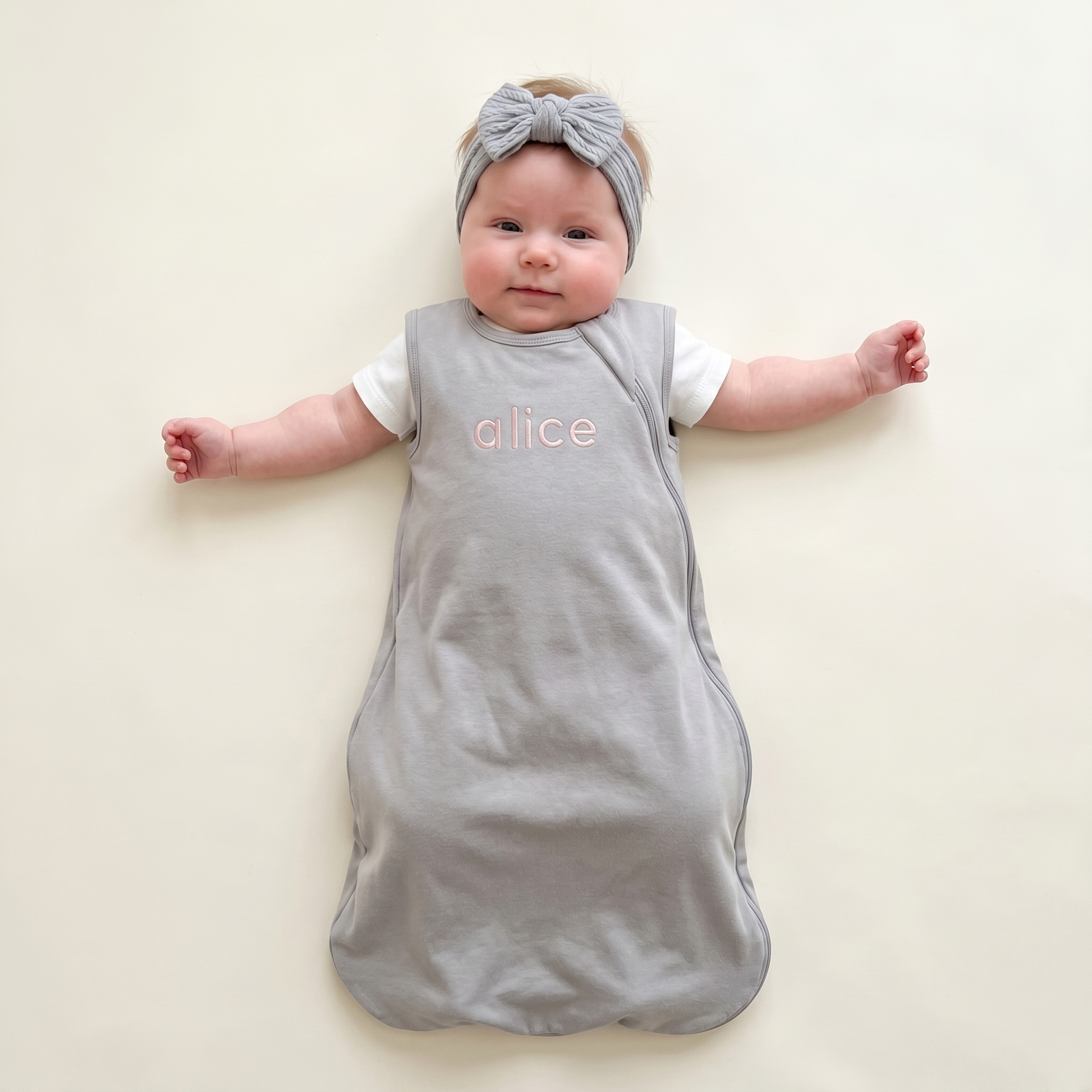
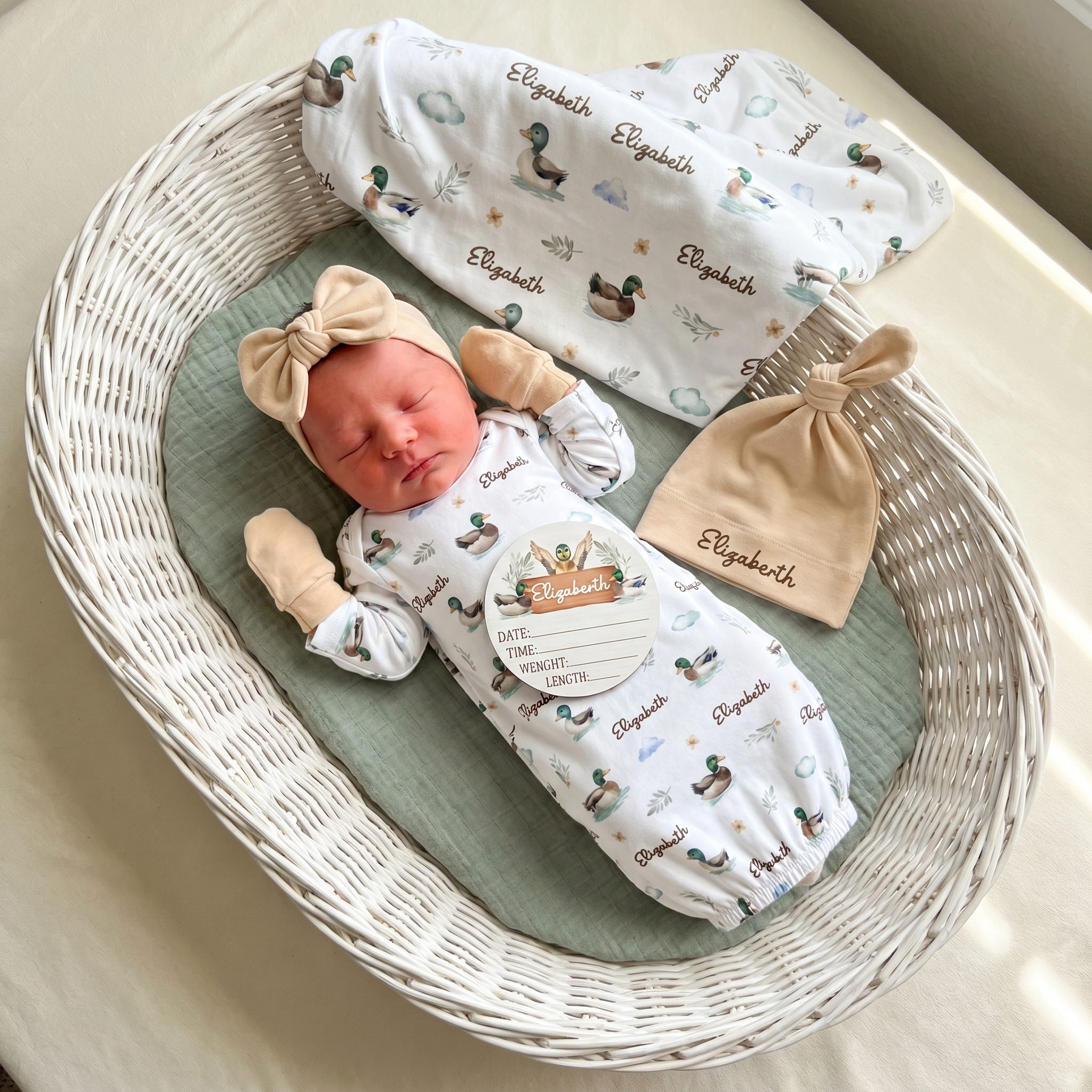
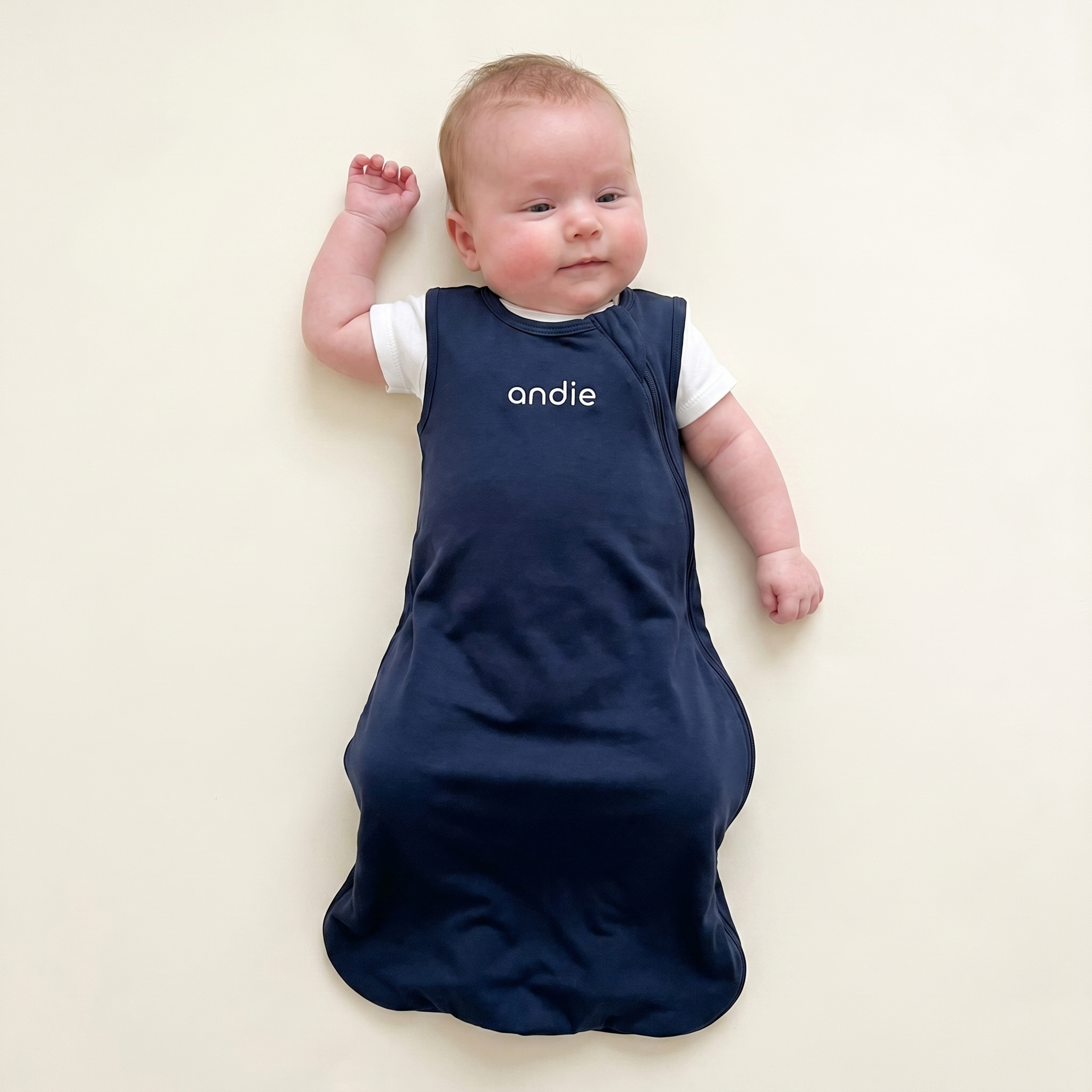
Sleep gowns are one of the most practical and beloved options for this transition stage. Unlike onesies or footie pajamas, a well-designed sleep gown allows your baby’s legs to move freely, supports natural hip development, and makes those inevitable middle-of-the-night diaper changes much, much easier.
At Pretty Birds, our Sleep Gowns are thoughtfully designed with this moment in mind. The elastic hem keeps your baby cozy without restricting movement, giving their growing body the freedom it needs — all wrapped in softness and patterns that feel personal and special.
Because honestly, if this is the first thing they’re sleeping in without a swaddle, it should feel like a gentle beginning.
 Other Tips for a Smoother Transition
Changing a sleep routine is a big deal for the baby and for the parents who've finally figured out what works. Here are a few things that can help:
Keep the rest of the routine consistent. Bath, feeding, dim lights, white noise — whatever your pre-sleep rhythm is, hold it steady. Familiar cues signal sleep even when the swaddle is gone.
Try a pacifier or lovey. A soft, safe comfort object introduced at this stage can help fill the soothing gap the swaddle leaves behind. Our Lovey Blankets are a gentle, parent-loved option for this transition.
Give it a few nights. Most babies adjust to arms-free sleep within 3–7 nights. There may be a rough patch in the middle. You're not doing it wrong; you're just in the adjustment window.
Ensure the sleep environment is safe. Firm, flat mattress; no loose blankets, pillows, or toys; fitted crib sheet only. Our Crib Sheets are made from soft, breathable fabric and fit snugly to keep the sleep space exactly as it should be.
A Note for Parents in the Thick of It
If you're reading this at 2 AM because your baby just rolled and you're suddenly questioning everything, take a breath. You caught it. That's the whole point of knowing the signs.
The swaddle phase is over, and that's okay. It means your baby is growing, getting stronger, and moving toward a new kind of independence — tiny and monumental at the same time.
Whatever comes next, you've got this. And we've got the softest little gown waiting for them when they're ready.
As your baby grows, these little transitions quietly mark something bigger. Leaving the swaddle behind may feel like a change, but it’s also a sign they’re ready for more comfort in new ways. At PrettyBirds, every piece is thoughtfully made to keep that sense of coziness going through every stage that comes next.